





Flexibility, Core & Why Your Saddle Should Match Your Body

Bike saddle fit usually starts with the obvious stuff: width, shape, padding, and what kind of riding you do. All of that matters. A lot.
But there’s another part of the fit story that’s easy to miss: how your body actually moves and supports itself on the bike.
Your flexibility affects how your pelvis rotates. Your core stability affects how well you hold your riding position. Fatigue affects both. Put those together and you start to see why two riders with the same sit-bone width can still need very different saddles.
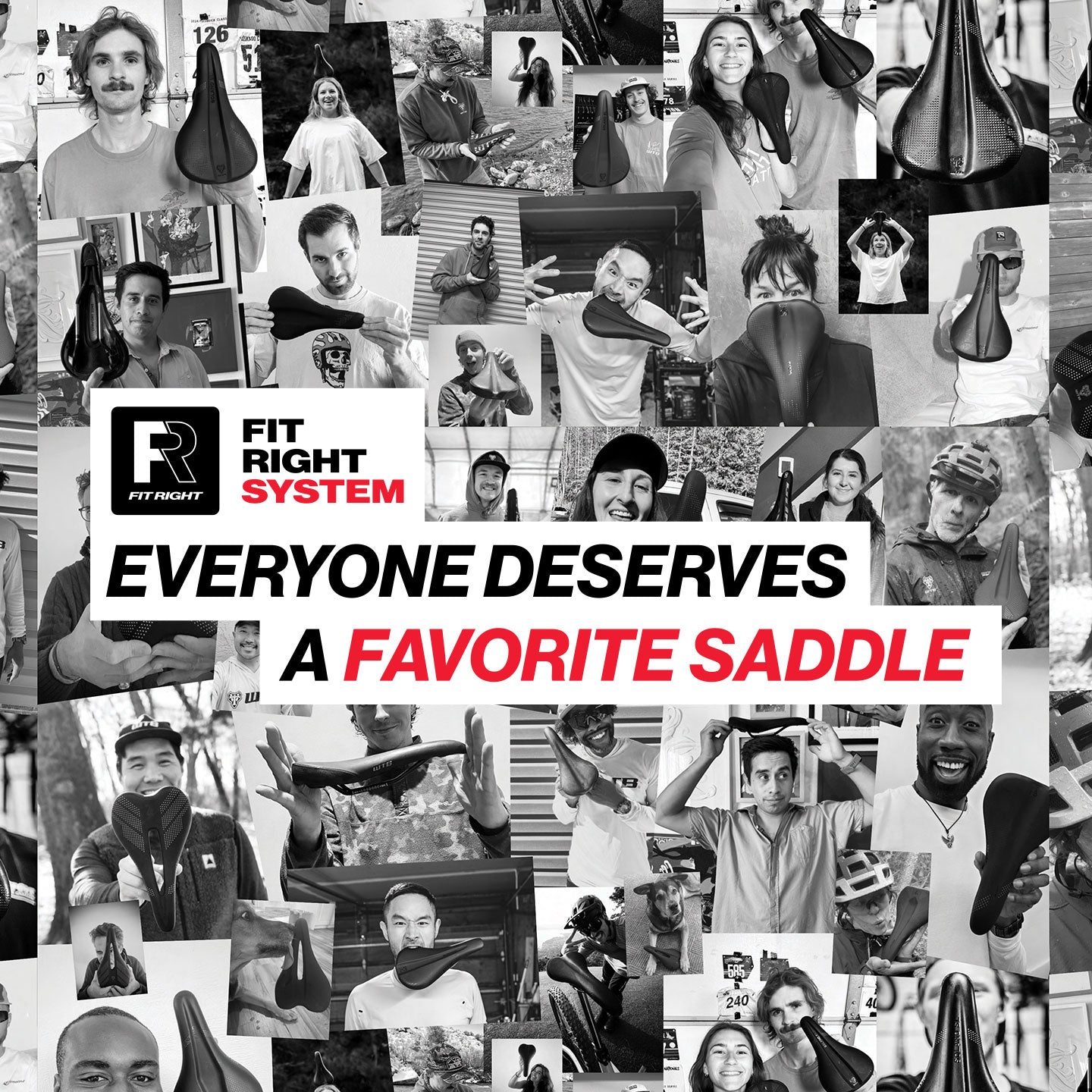
That’s why WTB’s Fit Right System looks beyond one measurement. It considers what makes you unique and how you ride, including flexibility and stability, to help point you toward a saddle that fits your body instead of asking your body to adapt to the wrong saddle.
Flexibility affects how your pelvis rotates
Flexibility influences how easily your body can hinge forward on the bike. Riders with more mobility through the hips, hamstrings, and lower back may be able to rotate forward from the pelvis more naturally. Riders with less flexibility may compensate in other ways, often by rounding through the back or sitting in a more upright position than the bike setup suggests.
Neither is wrong. It’s just different.
Those differences can change how your sit bones contact the saddle, how much pressure shifts forward, and what kind of saddle shape feels best. A saddle that works for a flexible rider in a lower position may not be the right answer for someone whose body naturally sits more upright.
The flexion test gives Fit Right more context
This is why Fit Right includes a flexion test. It’s a simple way to understand how your body moves before recommending a saddle.
The point is not to pass or fail. This is not gym class. It’s not about proving you can touch your toes or pretending you stretch as much as you said you would this winter.
The flexion test gives Fit Right more information about your natural range of motion. That context helps narrow the saddle options toward shapes and profiles that better match how your body is likely to sit on the bike.
Core stability helps you hold your position
Flexibility is only part of the equation. Core stability matters too.
Your core helps support your upper body while you ride. When that support is strong and steady, your weight can be shared more evenly between your hands, feet, and saddle. When your core starts to fatigue, more weight can settle into the saddle, your posture can shift, and pressure can build in places that felt fine earlier in the ride.
That’s one reason saddle comfort can change over time. A saddle that feels good for the first hour may start feeling very different once fatigue shows up and your body position starts to drift.
Core cycling is not just about power
Cyclists often talk about core strength as a performance thing. More stability. Better control. Stronger position. Smoother pedaling.
That’s all true, but core cycling matters for comfort too. A stable body moves more intentionally on the bike. It can handle changes in terrain, effort, and position without collapsing into one contact point.
Your saddle is part of that system. It should support your body as it is, while giving you room to move the way your ride demands.
Ride duration and intensity change the fit equation
Short rides can hide fit issues. Longer rides tend to expose them.
As miles add up, small pressure points get louder. Fatigue changes posture. More time seated means more time for the saddle to either support you or start causing problems. Intensity matters too, because climbing, sprinting, cruising, and technical riding all change how much weight moves through the saddle.
That’s why Fit Right looks at ride duration and intensity alongside flexibility, stability, sit-bone width, bike type, and riding style. The more complete the picture, the better the recommendation.
The right saddle should match your body, not fight it
A good saddle should feel like it belongs on your bike and under your body. Not because it’s the softest option. Not because it’s what everyone else is riding. Because the shape, width, profile, and support make sense for how you move.
If you’re flexible and ride in a more aggressive position, your saddle needs may look different. If you’re less flexible, spend more time upright, or rely on the saddle for more support as fatigue sets in, that matters too.
There’s no single perfect saddle for every rider. There is a better saddle for you.
Find the saddle that fits how you ride
Your body is part of your bike fit. Flexibility, core stability, ride style, and ride duration all influence how you sit, where pressure builds, and what kind of saddle is most likely to feel right.
WTB’s Fit Right System uses those inputs to help recommend saddles built around your body and your ride.
Because everyone deserves a favorite saddle, and finding yours should start with more than a guess.
Designed for Riders at Every Level
Fit Right does not frame flexibility or stability limitations as barriers. Even top-level professional riders can have restricted mobility. The key is matching saddle design to the rider, not the other way around. By combining lab testing, rider data, and years of saddle development, WTB aims to make finding the right saddle more approachable, more precise, and less reliant on trial and error.
Available Now
WTB’s Fit Right System is live now at www.wtb.com/pages/fit-right-system along with additional resources on saddle setup and positioning.
About WTB
Founded in 1982, WTB was formed in Marin County, the birthplace of mountain biking, to design better bicycle products. Renowned for saddles, tires, rims and grips, this rider-driven company continues to push the boundaries of what’s possible through an unrelenting spirit of innovation and passion for two-wheeled adventure.