




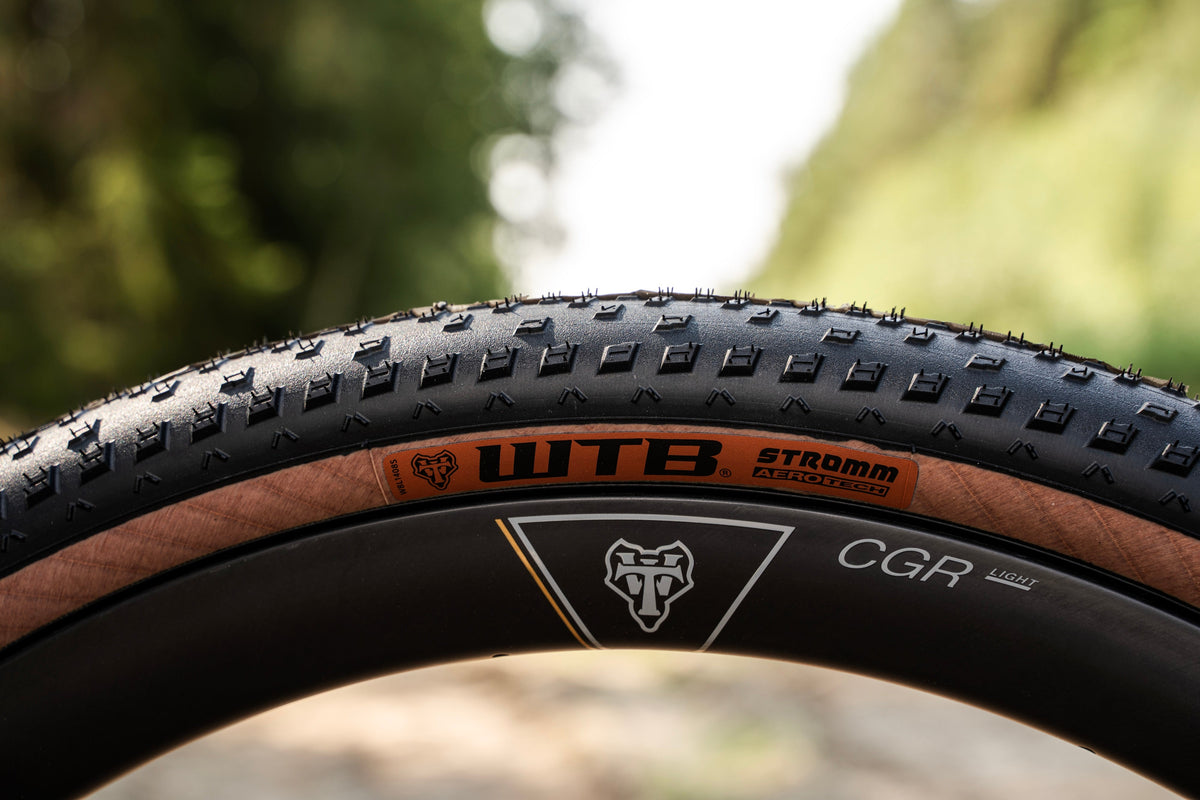
Can a Knobby Gravel Tire Be Aero? We Used 800 Million CFD Cells to Find Out
Can a truly capable off-road tire be made aerodynamically fast - without compromising tread, capability or rolling resistance?
GO WIDER. GO FASTER.

THE PROBLEM
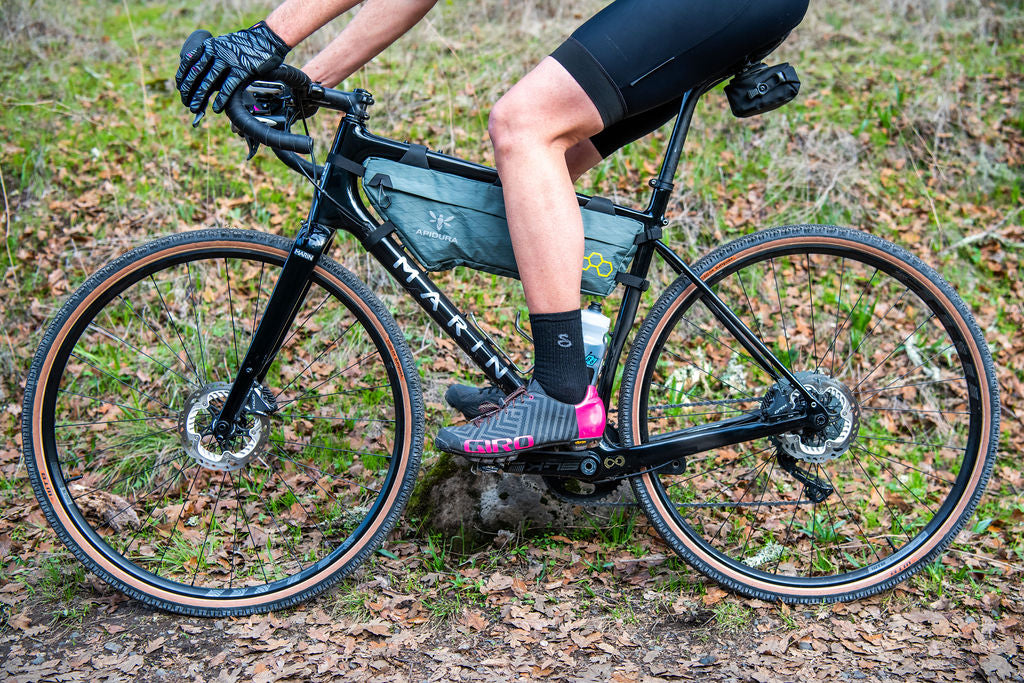
At Stromm, we’re always thinking about how to make people faster on bikes, and one of my greatest bike frustrations comes from one of my greatest joys. Our aerodynamicist Ben lives in Seattle, where there are stunning alpine gravel routes. The challenge is these roads are often so technical that an XC mountain bike might be more appropriate, but they are also so far into the wilderness that an XC bike would make it highly inconvenient to get out far to the most beautiful places.
Which got us thinking - how can we make a gravel bike XC capable but gravel-fast?
Frames help - you might hear more on that from Stromm in the future. Other manufacturers are slowly starting to make faster, more capable gravel bikes, but there’s still a long way to go. Wheels help - some folks are beginning to make the fast gravel wheels necessary though there’s still progress to be made, and you’ll hear about some of ours soon. But the bike’s most forward face, its leading edge and most important aerodynamic surface, would still have a big wide knobby tire on it.
We wanted to answer the question - can a truly capable offroad tire be made aerodynamically fast without significant compromises to tread/capability and rolling resistance? This study and our collaboration with WTB are the result, and this whitepaper documents how we attempted to answer that question.

What If?
To make a fast mountain-capable gravel tire, we needed an aero treatment that could handle substantial tread and dirty and muddy surface contamination, and could both mitigate the aerodynamic drag of slow rims and improve the performance of faster, soon-to-exist gravel aero rims. To see if that was possible, we’d need to answer a few questions.
Tread and Aero
For optimal aerodynamics, we usually need a nice clean front (we call it a leading edge) - but really good capable tread makes that impossible here. How impossible? Great question - this was our first challenge to answer.
If the tread takes the incoming relatively clean, laminar air (yes, cycling industry, low altitude air at cycling speeds starts as laminar, despite what you may have been led to believe) and changes it, we need to know exactly how - is it now turbulent? How turbulent? How much negative pressure gradient (a measure of how disturbed the air is) does a given level of tread produce?
To answer this question, we’d need to run computational simulations of various levels of tread to characterize the resulting airflow. The problem? CFD (computational fluid dynamics) costs more with more detail - and the level of detail required here would mean running some of the most computationally expensive simulations the cycling industry has likely ever run. An “expensive” cycling industry CFD simulation has about 15-20 million “cells” - the discrete boxes in which the computer simulates the airflow. Ours would need about 500-800 million. There are quite literally national research organizations that can’t run simulations that big. Even companies like Boeing try to avoid those for cost reasons.
But there was no better option, so we did. We learned exactly how much reasonable amounts of tread impacted the aerodynamic characteristics of the tire and rim aft of the tread, and determined how to make a lower-detail tread stand-in shape that provided the same behavior without 10x the computational cost. We’d love to share details, but our competitors would probably love that.

Rotational Aero
One of Stromm’s competitive advantages is that we can simulate airflow to 10x higher accuracy than our competitors at much, much lower cost. How do we do that? Extremely accurate tuning parameters for our CFD. We’ve spent over a decade tuning those parameters so that we can predict crosswind performance/stall, lift, and drag to levels competitive with companies like Cessna Aviation, well above the usual standard within cycling. The problem? Those tuning parameters only applied to non-rotating objects, and wheels and tires rotate.
We did substantial amounts of velodrome Chung virtual elevation testing to calibrate and validate our tuning parameters for rotating objects, and when we were finally satisfied with that, only then did we proceed with further design.

Aero Sidewalls
With tread off-limits to preserve capability, we needed an aero treatment that either didn’t noticeably impact rolling resistance, or was so beneficial it outweighed any rolling resistance downsides. In aerospace, the tried-and-true solution to fixing draggy shapes are vortex generators and laminar-turbulent transition-inducing “trip strips”.
Both devices mix the slower air near the surface with faster, more energetic air further away, bringing energy into the air nearest the surface. This trades a small increase in friction drag for a potentially large reduction in overall drag - perfect for a situation like a knobby tire where there is a large amount of drag to be reduced.
We tested hundreds of combinations of vortex generators and trip strips to find combinations that worked well at a variety of gravel-appropriate yaw angles, while also remaining fast when contaminated by the reasonable levels of dirt/mud likely on your typical gravel ride. We weren’t sure it was possible since we hadn’t seen anyone do it before, but we were excited to find out it was.


Testing and Results
Once we knew an aerodynamic, capable, low rolling resistance tire was possible, we set about better understanding how to make it. WTB provided incredible guidance on what factors affected sidewall rolling resistance (the energy lost due to the deformation of a tire's sidewall as it rolls, and we learned a great deal from what did and didn’t), how tire design and manufacturing works, and how that could affect the design of the aero features. After a great deal of iteration, we found an option that ticked all the boxes: no impact to tread design, reasonable manufacturability, excellent rolling resistance, and aerodynamics to make you forget you're running a wide, knobby tire
To check our work, we took the molded prototypes to the Jerry Baker Memorial Velodrome in Redmond, WA, and did some of the most detailed virtual elevation verification testing we’ve ever done. We controlled for tire and velodrome surface temperature, barometric pressure and temperature changes over the course of the test, tire pressures, body position of the rider, clothing position of the rider, rider body volume changes due to perspiration, chain tension - the testing was so finely controlled we could see the passing of a nearby train in the data! This data proved to us that, with a real world applicable tire setup, the tire saves 3 minutes and 10 seconds over 100 km at 30 kph, providing a substantial benefit over current tires.. Robert Chung’s test method essentially operates on the following equation for overall bike power input and output - if you can control and measure all but the aerodynamic power well enough, you can measure real world drag to a degree better than even many wind tunnels:

Real-world measurement was important for these tires especially because the tires are faster in laminar air conditions, and even many of the fancier cycling industry tunnels are very turbulent. Controlling for all the potential variables in an outdoor test is extremely challenging. Through extensive trial and error, however, we were able to refine our testing methodology to achieve a predicted error of less than one watt at test speeds of 30, 35, and 40 kph.
The final results? Significant drag savings - roughly equivalent to the best aero socks, all in an otherwise extremely practical and fast tire. Drags for various widely relevant speeds are shown below. For even faster pros, the savings continues to scale higher. Many much more expensive wheels claim to save less at higher speeds, so we were very happy with this result.

Finally, a few more details for my fellow nerds. The tests were performed with WTB’s mid-depth wheels on a representative gravel bike - newer aero gravel bikes may benefit even more given the likely aerodynamic interactions. The testing conditions were on a low-wind evening for repeatability, but did have some small crosswind to ensure our data was yaw-representative of typical real world conditions.
TURNS OUT, YOU CAN HAVE IT ALL.
GO WIDER. GO FASTER.

Learn more about Stromm Cycles here!
Written by Ben Rothacker; aerodynamicist at Stromm
International patents pending